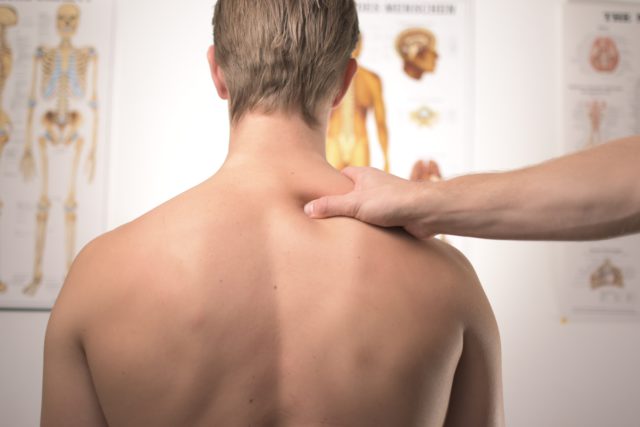
Pain Explained
Why Does It Hurt?
No one wants to get old. We are all getting older, every year is another year after all, but what can we do to stay well as we age? There have been a number of active ageing health articles in the media recently. We are all ageing, every single day, year after year (for many years to come hopefully!). But what does active ageing mean? And more importantly, when do you need to start taking action?

As it suggests, active ageing simply means being able to stay active and continue to do the things we want to as we age. Our ability to stay active really depends on our ability to move freely, which basically breaks down to maintaining strength and flexibility.
According to the Merck Manual, your muscle mass and strength begins to decrease from when you are around 30 years old. However, the good news is that you will only lose 10-15% of your muscle mass in your lifetime through the effects of normal ageing. One of the best ways to retain your remaining 85-90% muscle mass is through regular strength training. Body-weight exercises, like push ups, weights or using resistance bands are all excellent ways to build and maintain your strength.
More severe losses in muscle mass are usually from disease and leading a sedentary lifestyle. If you unfortunately fall ill or are injured and have to endure strict bed rest, it has been suggested that for every day you spend in bed, you may need to exercise for up to 2 weeks to regain the muscle mass that you lost.
The old adage of ‘use it or lose it’ really applies here (or more to the point ‘move it or lose it!’) Every little bit counts. Do some gardening, go for a walk or a round of golf, do a weights workout or take a yoga class, go for a swim down the beach or a bike ride. Enjoy as many different activities as you like! The more variety of movement you have, the better.
Ideally, we also want to do exercise that covers 3 main aspects. Cardio (getting out of breath), strength, and flexibility (stretching).
So when is the best time to start? Right now! It is never too early (or too late) to start exercising. Don’t be afraid to work out a bit, it will help you to stay healthy, look after your body and move with ease as you age. Feel free to speak with us if you need any help with these areas in your life.
Everybody knows that drinking water is an essential part of a healthy lifestyle. However, a study at the University of Sydney found that a whopping 82% of Australians failed to meet their recommended water intake!

Do you want to know why drinking water is important? Well, water is essential for pretty much everything that happens in your body, including blood circulation, metabolism, cognitive function, regulation of body temperature and waste removal. And because 50-80% of your body weight is water, it’s critical to maintaining good health that we keep topping up and stay well hydrated.
So, how much water should you be drinking? Let’s keep it simple. According to the Australian National Health and Medical Research Council (NHMRC) the recommended intake for Australians and New Zealanders’ is 2.6L for adult males, 2.1L for adult females and 1.0–1.9 L for children and adolescents. Depending on the glass, 2 litres of water is around 8 glasses per day.
That’s probably a lot more than what most people are actually drinking, so if you’re not sure just keep a track through the day. If you are not getting the recommended intake then try and get another couple of glasses in.
Also, your recommended daily intake of water can vary according to your age, the amount you exercise, as well as with pregnancy and breastfeeding.
A 2017 study at East London and Westminster Universities, found that students who drank just 300mls of water in class boosted attention by up to 25%! So, if you’re finding it hard to focus, experiencing fatigue, sleep issues or headaches; grab a good size bottle of water and clear out that brain fog!
So remember to stay well hydrated and drink plenty of clean, fresh water ever day. If you’re unsure of how much you should be drinking, just ask us on your next visit!
So, back to school for another year!! You may never have considered it, but there can be a considerable amount of spinal load involved with our littlies trekking off to school. Coolum Family Chiropractic is encouraging our young Aussies to adopt the following practical and useful health habits all year round to minimise the risk of spinal stress.
Backpack
This is the big one! Or hopefully not, small bags are better 😉
Before kids even step through the school gates, they are already putting their spines to use by carrying large, often heavy backpacks. With so much that goes into a child’s backpack, it’s important that they are packed correctly, including:
See the backpack that has our tick of approval, the Spartan Chiropak II
Posture
Kids spend a large chunk of their day sitting down at desks, so it’s important that they maintain good posture by sitting with their shoulders back and relaxed, with their chair tucked in and both feet firmly on the floor.
Screen Time
Screens, computers and smart devices are commonly used in classrooms for learning purposes these days. It is important to monitor the recreational screen time and try and reduce this to two hours a day,1 or at least maintain a balance between screen activities and non-screen related activities.
Nutrition
Maintaining a nutritious diet is important at any age, but especially for growing and developing children. Eating a balanced, healthy diet is essential to keeping kids alert in the classroom and active in the playground.
Physical Activity
Participating in physical activity in school, at home or part of a weekend sporting club is key for a child’s health and wellbeing. As a guide, kids should be getting at least 60 minutes of physical activity everyday.1
Look after your kids spinal health by applying these simple and effective tips. Hope they all have a great school year!
Did you know that Chiropractic is not a treatment for back pain? Even though it is one of the main reasons people visit a chiropractor, we are not actually ‘treating’ your back pain.


Instead, chiropractic care focuses on correcting your body’s alignment to improve function and help the body to heal itself. We do this by adjusting your body’s structural framework (skeleton), and in particular your spine.
Of course, chiropractic is very effective at helping back pain. That’s because, by correcting alignment and restoring movement, we help your body to function better. And if your body works better, you have to feel better!
Quite simply, instead of focusing on the symptoms (pain) we find and correct the cause. If you correct the cause of the problem, the pain will go away by itself as your body returns to normal function and heals itself.
No medications, no surgery, just completely natural healing. That’s Chiropractic! ❤️❤️

Did you know that recent studies have shown a link between how fast you walk, and your state of health. Basically if you are a fast walker you are going to live longer.
Research conducted over a 50 year period shows that our gait (walking) is not just a means of getting around, but can also be an integrative measure of our health. They found that people who walk slower had physical and biological indicators of accelerated aging, including compromised brain integrity (eg, reduced brain volume and cortical thickness).
In general, the slower walkers tended to show signs of “accelerated ageing” with their lungs, teeth and immune systems in worse shape than those who walked faster. Not only were slower walkers’ bodies ageing more quickly – their faces looked older and they had smaller brains.
It has been suggested that the average person walks at 80 paces per minute. Those who walk at 100 paces per minute or higher are expected to live longer!! .
We think that’s a good enough reason to pick up the pace!
ps. Michelle and I were discussing this when we were walking our dog down the beach this morning. So we decided to count our paces for one minute. 125!! ?
Reference: https://jamanetwork.com/journals/jamanetworkopen/fullarticle/2752818?resultClick=24

No. A healthy lifestyle is! But laughter certainly can help to improve our health. Check out some of these benefits of having a good chuckle.
When you laugh, your body increases its oxygen intake and releases endorphins. Endorphins are the body’s natural painkillers. By laughing, you can release endorphins, which can help ease chronic pain and make you feel good all over. Laughter can increase your overall sense of well-being. Doctors have found that people who have a positive outlook on life tend to fight diseases better than people who tend to be more negative. So smile, laugh, and live longer!
Negative stress can cause your body to release chemicals that weaken your immune system, making you more likely to contract a disease. Laughter, though, reduces negative stress and, in turn, prevents those chemicals from being released. Laughter also promotes the release of T-cells, which are specialised immune system cells that fight off sickness. Next flu season, you may want to consider laughing as much as you can!
People who lower their blood pressure, even those who start at normal levels, will reduce their risk of stroke and heart attack. So grab the Sunday paper, flip to the funny pages, and enjoy your laughter medicine.
By reducing the level of stress hormones, you’re simultaneously cutting the anxiety and stress that impacts your body. Additionally, the reduction of stress hormones may also result in higher immune system performance. Just think: Laughing along as a co-worker tells a funny joke can relieve some of the day’s stress and help you reap the health benefits of laughter.
If two people are laughing together, they will feel more emotionally connected. This makes laughter a great tool if you are going on a date or trying to make friends with a coworker. If you can get them laughing and laugh yourself as well, the two of you will both feel more connected to one another, and you will both leave the experience feeling more positive about the other person.
While you may not want to skip your workout routine in favour of watching stand up comedy, it’s still true that laughter does burn calories and can promote weight loss.
According to a study by the International Journal of Obesity, laughing for 15 minutes can burn 10-40 calories by raising your heart rate.
The ability to laugh at yourself when you make a mistake is a truly valuable trait. Laughing at yourself allows you to build confidence and keeps minor setbacks from dragging you down. If you can laugh something off rather than letting it fester in your mind, you can move on much quicker and avoid letting a small problem become a major one.
Want to get six-pack abs? Laugh more often. Laughter causes the muscles in your stomach to contract in a similar way to doing crunches or situps. This is why you may feel your stomach hurting after a long period of heavy laughter.
According to Dorland’s Medical Dictionary: Health is a state of optimal physical, mental and social well-being; and not merely the absence of disease and infirmity.

And Webster’s Dictionary defines health as being a condition of wholeness in which all organs are functioning 100%, all of the time.
So health is not merely feeling okay, but it’s actually when your body is functioning at its absolute best.
Then where does health come from?
Proper nutrition, regular exercise, adequate rest and a positive mental attitude are all vital for maintaining health, but health is defined as being about function. So what actually controls the function of your body?
According to Gray’s Anatomy: “It is the purpose of the brain and nerve system to control and coordinate the function of all the tissues, organs and systems of the body.”
Your nervous system is so important that it is the first thing formed in the developing embryo, and the central nervous system is protected and completely encased in bone (yep, that’s your skull and SPINE!).
Interference to your nervous system may adversely affect the function of your body, leading to a decrease in health (which may eventually manifest as symptoms such as back pain, headaches or just about any ailment really).
If you have any interference to your nervous system, your body can not function at 100%. So it is important that we look after our posture and spinal health as it may have an impact on the nervous system and possibly our whole health.

Balance training is something that most of us don’t consider to be an important part of our exercise routine. However along with strength, endurance and flexibility, balance exercises should be included. And for good reason: Balance is control.
Think of toddlers learning to walk and the process they go through trying to gain the balance to be able to move freely. Once they learn to balance their body, they have control over their movements. The importance of balance doesn’t really change as we get older. Better body balance makes it easier to move and helps prevent injury. But it really is a “use it or lose it” kind of thing, which means it’s important to practice balance at all ages.
It’s important to note that you don’t need to do all your exercises every day, but variety does help keep the body fit and healthy, and makes exercise interesting. You can do a variety of exercises to keep the body fit and healthy and to keep your physical activity routine exciting. Many different types of exercises can improve strength, endurance, flexibility, and balance. For example, practising yoga can improve your balance, strength, and flexibility. A lot of lower-body strength-training exercises also will improve your balance.
If you feel you that you have a severe balance problem then you should speak with us before trying any of these exercises.
Balance exercises can be done every day, or as many days as you like and as often as you like. You can’t overdose on them, so do them as often as you like! Preferably, older adults at risk of falls should do balance training 3 or more days a week and do standardised exercises from a program demonstrated to reduce falls. It’s not known whether different combinations of type, amount, or frequency of activity can reduce falls to a greater degree.
Tai chi exercises also may help prevent falls. Balance, strength and flexibility exercises can be combined.
Try to incorporate a few of these exercises into your routine. Also, try to find different ways to add them to your everyday activities. For example, brush your teeth while standing on one foot!